23 Essential Documents You need for Scholarship Application and how to get them
Imagine that you found the perfect scholarship; full tuition, living expenses covered, everything you’ve dreamed of. You rush to apply, only to realize you don’t have a crucial document. Of course, the deadline passes and consequently, the opportunity vanishes.
This happens to thousands of Nigerian students every year. Not because they aren’t qualified, but because they weren’t prepared.
Here’s the truth. Landing scholarships isn’t just about grades or essays. It’s about having your documentation game tight before opportunities appear. By the time a deadline drops, it’s too late to start gathering documents.
This checklist will show you exactly what you need, where to get it, and how to prepare it so when your dream scholarship appears, you’re ready to submit within 24 hours.
Academic Documents
1. Academic Transcripts
This is the official record of all courses and grades from secondary school through university. You can get it from your school’s academic registry or records office. Request 5-10 certified copies ahead to factor in processing time.
2. WAEC/NECO Results
You need your Original result slip + scratch card for online verification. These can be obtained from WAEC or NECO office if you’ve lost yours. Ensure you keep your scratch card PIN safe as you’ll need it for most applications.
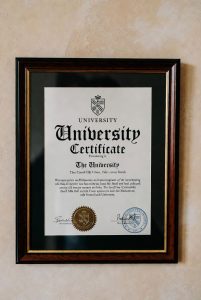
3. Degree Certificates
This is your actual diploma/certificate. Most Nigerian universities issue certificates 6-12 months after graduation. Get certified copies made and never send originals.
4. Academic References/Recommendation Letters
Request these from Lecturers, professors, academic advisors who know your work. Prepare 3-5 reference contacts and brief them about your goals in advance so they can write targeted letters. Also give referees at least 3 weeks notice.
Identity & Personal Documents
5. International Passport
It can take up to 6-8 weeks to process; even longer sometimes. Most scholarships need 6+ months validity remaining. You can get it from Nigeria Immigration Service offices.
6. National ID Card (NIMC)
This is required for most government scholarship programs. You can get it from NIMC enrollment centers nationwide at most 2-4 weeks after enrollment.
7. Birth Certificate
The National Population Commission issues this, you can also get it from hospitals. If you don’t have it, you can still get one as an adult.
8. Local Government Identification Letter
This is a letter confirming you’re an indigene of your LGA. You can get it from your Local Government Secretariat or Liaison Office.
Financial Documents

9. Bank Statements
About 3-6 months of statements is required because many scholarships assess the applicants’ financial need. You can request certified stamped statements from your bank
10. Proof of Income (Parents/Guardian)
This can be either:
- Salary slips (if employed)
- Tax returns
- Business registration + income proof (if self-employed)
- Affidavit of income (if informal sector)
11. Sponsor’s Letter
This is a formal letter from anyone supporting your application. It should include their details, relationship to you, and commitment to support.
Language Proficiency Documents
12. IELTS/TOEFL Scores
This is usually required for UK, Canada, Australia, US scholarships with a passing score of 6.5-7.0 in IELTS or 80-100 in TOEFL.These results are valid for 2 years from test date. You can take a minimum of 2-3 months to prepare.
13. Medium of Instruction Letter
This is a letter from your university confirming that English was your teaching language. Many Nigerian students overlook this whereas, it can sometimes substitute for IELTS/TOEFL and you can get it from your university’s registry.
Standardized Test Scores
14. GRE (Graduate Record Examination)
This is usually required for Masters/PhD programs in the US, Canada. It costs $220 (approximately ₦352,000 depending on the conversion rates at the time) and is valid for 5 years.
15. GMAT (Graduate Management Admission Test)
This is required for MBA programs and costs $275 for a physical exam and $300 for an online exam.
16. SAT/ACT
This is required for Undergraduate programs in the US. If you’re targeting top US schools, don’t skip this.
Professional Documents
17. CV/Resume
This is different from job CVs, and tailored to academic/scholarship applications. It should be in 2-3 pages maximum and include Education, research, publications, volunteer work, achievements.
18. Work Experience Letters (if applicable)
This should include the Job title, duration, responsibilities on a company letterhead with contact details.
19. Professional Certifications
Examples are Project management, IT certifications, professional licenses. Also keep both original and certified copies
Special Documents
20. Research Proposal (for Masters/PhD)
This is a 2-5 page document outlining your intended research. You need it for Research-based programs. It is advisable to have a professor review it before submission and ensure it includes:
Topic and background
Research problem
Objectives
Methodology
Relevance to host university
21. Portfolio (for Creative Fields)
For example, Art, design, architecture, music scholarships in a Digital portfolio (PDF or website link) format.
22. Medical Certificate
This is required by some international scholarships and you’d need a General health examination from a recognized hospital. It is usually valid for up to 6 months.
23. Police Clearance Certificate
This is required by many countries (Canada, Australia particularly). You can get it from Nigeria Police Force Criminal Records Department. It takes a period of 2-4 weeks to process.
TO-DO LIST

Things to start with
- Check your passport validity and renew if expiring in 12 months
- Request academic transcripts from your schools
- Find your WAEC/NECO results and scratch cards
- Make a list of 5 potential academic referees.
Short-term Actions (This Month):
- Register for IELTS/TOEFL if you haven’t taken it
- Get your birth certificate if missing
- Get your police clearance certificate
- Create/update your academic CV
Long-term Preparation (Next 3 Months):
- Build relationships with professors for strong recommendation letters
- Prepare research proposals if targeting graduate programs
- Organize all documents in both physical and digital folders
- Create a tracking system for application deadlines
How to Organize your Documents
Create Three Folders
Folder 1: Physical Originals
Store in a waterproof bag and a secure place. Never send originals unless absolutely required.
Folder 2: Certified Copies
Get multiple certified copies of everything as these are the copies you’ll submit.
Folder 3: Digital Backup
Scan all your documents in high resolution (300 DPI minimum). Save them as PDFs with clear file names and upload to cloud eg. Google Drive, Dropbox. You are advised to upload to more than one service to ensure you can still access your files if one platform fails or suffers a sync issue.
Common Mistakes To Avoid
- Waiting until the deadline to gather document
- Sending uncertified or low-quality photocopies
- Not keeping digital backups
- Forgetting to check passport validity
- Assuming “medium of instruction” letters aren’t necessary
- Not giving referees enough time to write strong letters
- Using incorrect document formats (wrong file types, size limits)
You might be concerned that this procedure will cost quite some money but compared to the ₦50 million+ you could receive from a full scholarship, it is worth all the demands.
The students who win scholarships aren’t always the smartest, they are the most prepared. They have their documents ready, their stories clear, and their applications set.
Start building your scholarship document arsenal today. Not next month. Not when you find the perfect opportunity. Today.
Because when that dream scholarship appears with a 2-week deadline, you won’t be scrambling. You’ll be submitting.
Ready to level up your scholarship game?
Download our free “Scholarship Document Tracker” to organize everything in one place.
If you have questions about specific documents? Drop them in the comments and we will guide you.
Related posts:
 HOW TO WRITE APPLICATION LETTER FOR SCHOLARSHIPS
 HOW TO WRITE APPLICATION LETTER FOR SCHOLARSHIPS

 URGENT, Application Deadline is Closing The Next Day: Yokohama National University Special International Scholarship for Urban Infrastructure Engineering in Developing Countries 2022